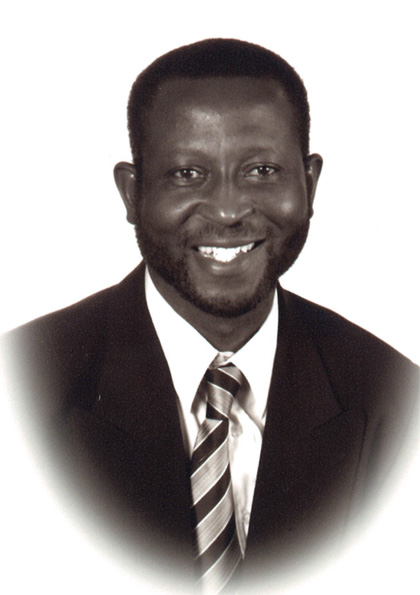
Terminal illness – First Life Experience
The first life experience that will be analyzed is Mr Baba's near-death experience in 2003. He suffered from severe internal bleeding and he was hospitalized in Dandenong Hospital for close to a week.
Throughout his life, Mr Baba had never experienced such severe illness. Thus when this happened to him, he truly believed his life on this earth was over and began to prepare himself for death. He bid farewell to family members and entrusted his belongings (assets/property) to his younger brother for safekeeping until his son was old enough to acquire ownership of it. Finally, he declared the Shahaada (Islamic declaration of faith in the unity of God).
On his death bed, several questions regarding his family's wellbeing after his death flashed through his mind, especially regarding his six months old child, whom he thought was going to become an orphan. 'Who would care for my son? Would he grow up to become an educated Muslim in Australia? Would he ever be shown the true love of a father?' The prospect was saddening…
Mr Baba turned to the Holy Qur’an for guidance on orphans (‘yatim’). He realized that even though the concept of orphan ‘yatim’ has been mentioned several times in many chapters of the Qur’an, he only truly appreciated its significance now that it was a possible reality in his life. He realized that some Qur’anic verses that he previously would have read without a second thought, made so much sense to him now. This is the significance of this life experience. It was only now that he could grasp why God placed an immense significance in the Quran regarding caring for the yatim. The verse "Fa ammal yatiima falaa taqhar" (Therefore, treat not the orphan with oppression Surah 93 Ad-Duha, Verse 9) had a particular resonance with him. "Yes..yes..yes!" he repeated to himself, "You are right Allah!" was his response to the verses.
Mr Baba survived the illness and regained his good health. Despite his previous Islamic belief in death as a reality and its inevitability, it was only after his personal encounter with death itself, that he was awakened to its sudden nature.
His new-found conviction in caring for orphans compounded with his renewed realization of the suddenness of death affected his life in that it allowed him to practice the teachings of Islam more fervently as he realized that death is a reality and it comes unannounced. Also, it allowed him to firmly practice Allah's commands to care for the orphans (yatim) seriously to the extent that he made this promise to God: "Give me life, and I will look after an orphan."
Furthermore, 2006 provided Mr Baba with an opportunity to uphold this promise to care for orphans. A child, who was inspired by a speech which Mr Baba had presented in Ghana in 1999 regarding the importance of education, wrote to Mr Baba asking for financial assistance to further his education. Upon graduating from high school with exceptional grades, the boy was unable to continue his studies due to lack of financial support from his family. The boy could not afford to pay the required educational fees as his father had passed away, rendering him an orphan when he was about seven years old. The promise which Mr Baba made to God (to look after an orphan) when he was ill, rang bell in his ears…
Although a difficult task financially, considering that Mr Baba had his own family to care for, he realized this was God's way to test him. Thus he accepted the boy's request and organized a place for him to study at the International Islamic University Malaysia (IIUM).
Here, we can see that Mr Baba's reaffirmed belief in the importance of caring for orphans in Islam affected his decision because he provided an ongoing financial and other support for the education of the orphaned boy. His decision to help the orphan continues to affect his life even today. During his visit to Ghana in 2007, his house was flooded with orphans seeking his help. His near death experience in 2003 left such a profound impact on his beliefs about death that over 3 years later, he could not turn the orphans away due to his strong belief in caring for orphans.
Doncaster Park – Second major life experience
The second major life experience occurred in 2006 at Doncaster Park during the celebration of Eid-ul Adha, an Islamic celebration.
Mr Baba was simultaneously catching up with family friends as well as keeping an eye on his son, who was then three years old in the playground. Mr Baba soon became so immersed in conversation that his mind drifted away from his son. Soon after, a young Ausie lady brought to his attention the ice-cream van that his son was now standing beside. What he saw in the distance brought tears to his eyes. His son, extending his hand to take some ice-cream, only to be disappointed time after time, as the ice-cream was handed to other children.
To many, this sight may not be of any significance. However, it reminded Mr Baba of the state his son would grow up in if he was not there to support him. "So this is what will happen to my son if I am dead", he said to himself.
This life experience was significant as it rekindled his near-death experience in 2003 and his belief in the importance of the verse "Fa ammal yatiima falaa taqhar" (Therefore, treat not the orphan with oppression Surah 93 Ad-Duha, Verse 9).
This reestablishment of his belief regarding caring for orphans, in turn, affected his life decisions in that he has now made it his mission never to deny his son anything, thus fulfilling his duty as a father.
It is also interesting to note that Mr Baba's first near-death experience is interconnected with his experience of watching his son by the ice cream truck as the latter served to reestablish his initial realization of the importance of caring for orphans in Islam. Not only was the incident besides the ice cream van a reminder but whenever he revisits the story it triggers the past memories, once again confirming his belief in caring for orphans.
Mother's Death - Third Major Life Experience
Mr Baba's third significant life experience occurred in July 2007 with the sudden death of his mother. Upon seeing off her daughter at the Accra international airport in Ghana, she decided to visit one of her daughters in Kumasi before returning to her home town at 2:00 PM on Saturday 21 July 2007. However a sudden severe headache at 10:00 AM left her dead by 12:00 PM midday, only two hours before her departure!
The sudden death of his mother affected Mr Baba's beliefs, in that he realized, yet again, the sudden nature of death and the fleeting temperament of this world. It reaffirmed his belief in the verse advising those Muslims who believe in Allah to enjoin in good work before death comes upon them unexpectedly; as now he could now identify with it. Furthermore, the demise of his mother has convinced him fully that death is a reality.
With his belief in death reaffirmed, Mr Baba no longer saw the benefit in accruing wealth in this world. Upon his sisters request to complete a house which he was building in Ghana, he replied "What for? For how long am I going to live in it (in this world)?" His beliefs have now affected his life so much that he became uninterested in the material wealth. He also actively listens to and reads Quran to remind him of God and death.
Baby son's near-death experience – Fourth Significant Life Experience
In 2007, Mr Baba had his third son in a roll. He believed that the children are gift and blessings from God so he was very happy and grateful to Him. At the same time, Mr Baba believes that the children, like any other blessings, are trust and test from God.
Unfortunately, Mr Baba’s happiness with the coming of his third son was short lived because the newborn (three months old) son, suffered from a collapsed lung and heart failures; two major life-threatening illness. Thus the baby was on life support for three days at the Monash Medical centre, until doctors felt that it was a losing battle and decided to stop treatment and switch off the life support machine on the fourth day!
Mr Baba's growing concern for his son's fragile life and his religious beliefs enabled him to turn to God for help. Mr Baba believes that God who determines life and death is merciful and He responds to a distress peoples’ calls (Du’a/prayers). He slaughtered a sheep in the name of God (an Islamic ritual) when relatives and friends gathered to read the whole Quran (Khatm). Moreover, Mr Baba offered prayers during the night, Qiyaam-ul Layl and he made a promise to God that if He kept his son healthy and alive, he would donate five computers to a disadvantaged school in his home town in Ghana. He made continuous supplication to God, keeping in mind God's words, "Id-‘uuni, as-tajidlakum," "Pray/Call Me, I will answer your prayer/call" (Qur’an 40:60). He implored God to show his family mercy, especially considering it was the month of Ramadan, the month of Mercy.
The time came for the doctors to switch off the life support machine but miraculously, the baby was showing signs of breathing. He survived!
Mr Baba was convinced beyond any doubt about the power of Du’a (supplication to God), referring to it as the "untapped medicine to social problems". He perceived doctors and medicines as only a means; and the true source of all sustenance is in fact, Allah. After all, it was the doctors who had given up hope that the baby would survive. Hence this experience served to affirm his belief that Allah is truly The Sustainer and has power over all things. Furthermore, this experience confirmed his belief that God is merciful.
His strengthened belief in the power of Du’a and God’s mercy, affects his life in that he turns to God as his only source of help and guidance, and treats Du’a as his remedy to any hardships he experiences.